Case Study: Diablo IV Emote Wheel
WHY IS THIS IMPORTANT?
This case study evaluates the usability of Diablo IV’s emote wheel, focusing on cognitive load, discoverability, and speed of interaction. The current interaction model relies on recall rather than recognition, which may introduce friction during active play. This audit explores how the pursuit of a unified interaction pattern impacts usability and where opportunities exist to reduce cognitive effort.
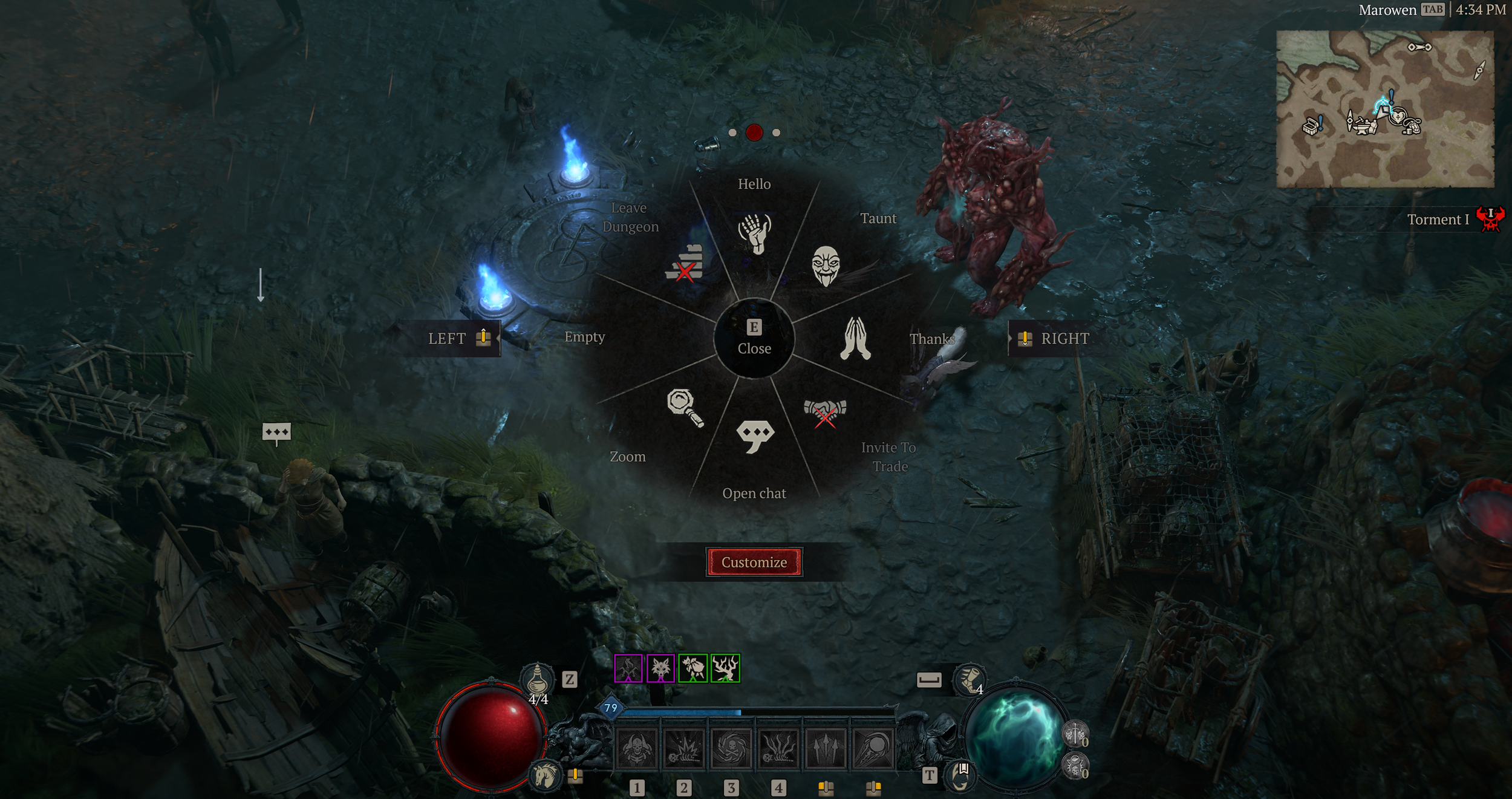
PC Emote Wheel Menu
CONTEXT
This audit focuses on the emote wheel with console interaction as the primary lens. Diablo IV is designed to support both PC and console input methods, which introduces challenges in maintaining parity, familiarity, and efficiency across platforms.
Through extended console play, the emote wheel surfaced as an interaction that may carry higher friction relative to its intended use. While it is not part of the game’s core combat loop, it supports broader design goals tied to social expression and cooperative play—areas that have expanded in this installment through features such as world events, group finder systems, and shared spaces.
Because this interaction exists outside high-stakes gameplay flows, it presents an opportunity to evaluate whether a more streamlined interaction pattern could encourage more frequent use without introducing additional complexity or risk to core systems.





PROCESS
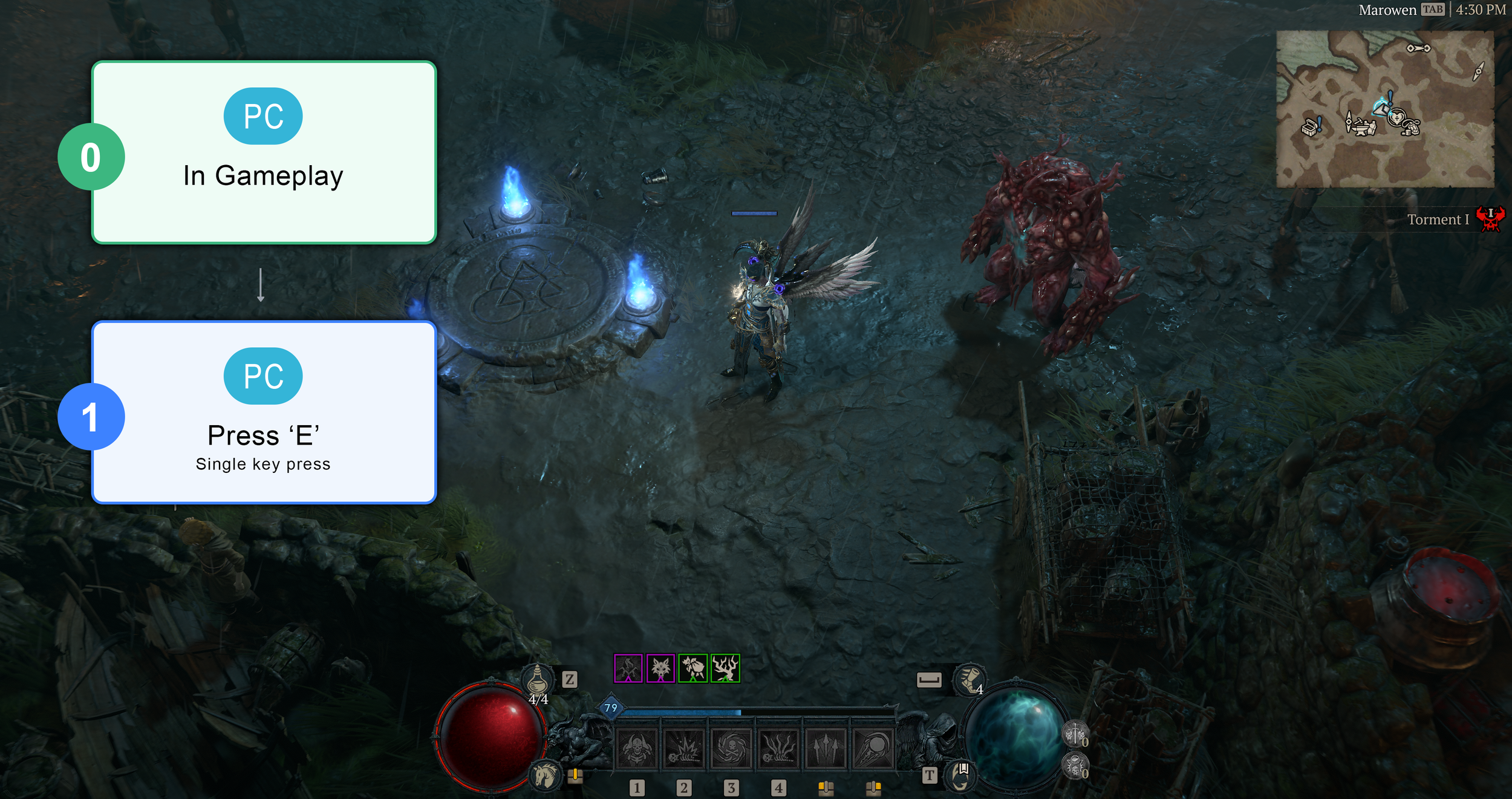
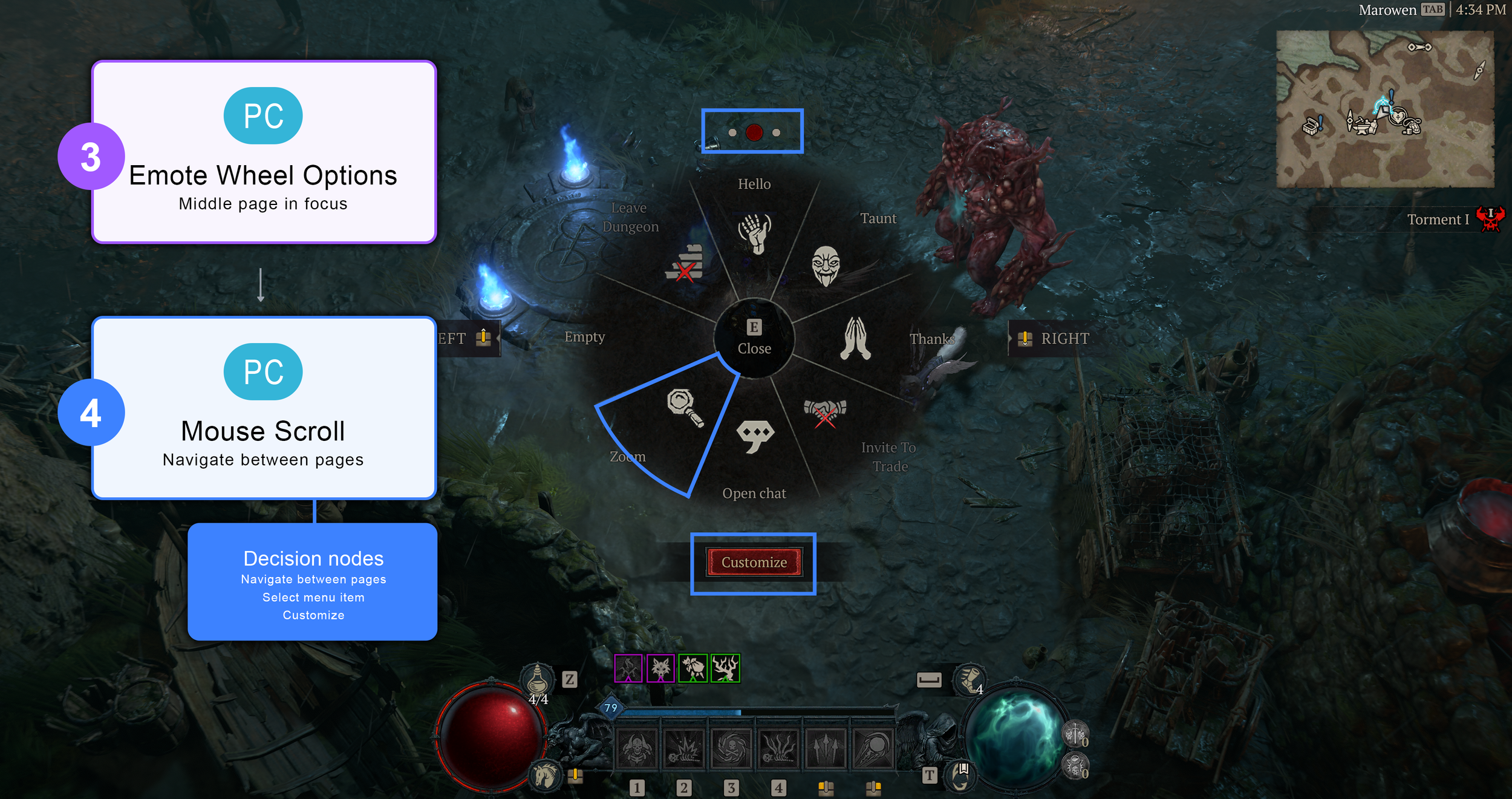
Map current interaction flows (PC & Console)
Identify points of friction related to cognitive load, discoverability, and speed
Explore pattern adjustments that reduce friction without impacting parity or core gameplay + additional considerations
LIMITATIONS & OPEN QUESTIONS
As an independent audit, this evaluation is based on publicly observable interactions and established usability heuristics. It does not include access to internal telemetry, usability research, or documentation outlining original design intent or technical constraints.
As a result, the findings presented here should be understood as potential usability risks and opportunity areas, rather than confirmed player issues.
Validation Needed
To determine whether the identified opportunity areas would meaningfully benefit the team, further validation would be required. This includes access to usage metrics, error rates, and player segmentation data across input methods (controller vs keyboard/mouse). Additional context around accessibility requirements, localization considerations, and prior design decisions would also be essential to ensure any proposed changes align with broader system goals.
Detecting Abandonment & Error
To identify silent failure within the emote wheel interaction, I would analyze behavioral signals such as opening and closing the wheel without making a selection, repeated activation within short time windows, and rapid correction behaviors following an initial selection. These patterns help surface moments where player intent is present, but the interface does not sufficiently support confident action.
Mapping these events across the interaction funnel—and segmenting them by input method and gameplay context—would help reveal where friction is most likely to occur and which player cohorts are most affected.
FINAL PRESENTATION
The roundup shared with partners and stakeholders.
This work directly informed Mixer Web Discovery & Information Architecture.


